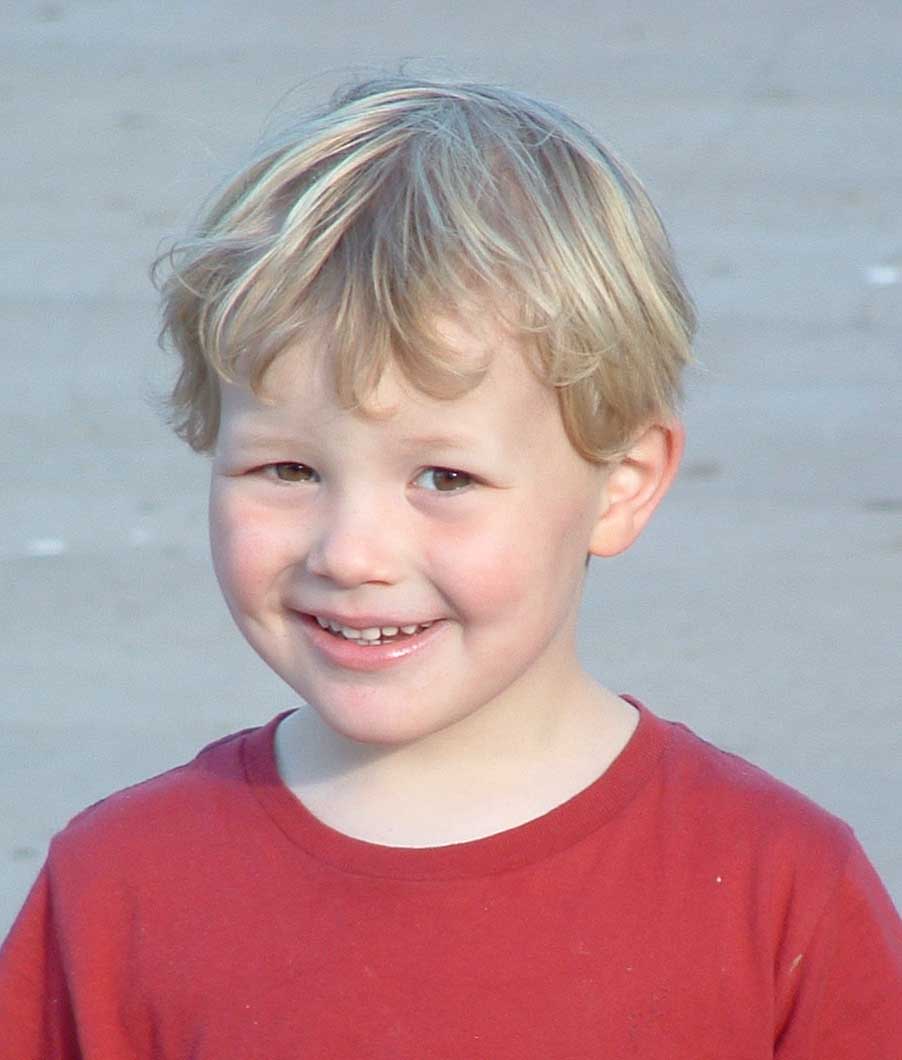
Although my two year old is not the subject of this blog, he features in my worries frequently.
I have been concerned about him for a little while. He’s obviously not ASD from his social skills, and I owe a lot to RDI for helping me to recognise his good referencing and checking. However, I think his speech is slow, his bowel motions and picky food habits remind me of Bright Eyes, plus he has a clear milk intolerance.
I thought he might need testing for intolerances so that I could get on top of whatever gut issues he has and increase his rate of normal development, so I went into the GP a few months ago to ask her for an allergy test. She wrote a referral to the allergy clinic of the best children's hospital in the state, which is where I drove (1.5 hours) today.
The first thing I said to the paediatrician was “I’ve got an ASD boy, and I’m concerned about this child because I know there’s a brain/gut connection and diet plays a big part in autism, and I think he has some allergies, plus a few gut issues the same as my ASD boy.”
She said straight away, “Well, you know that research has been completely debunked. Are you talking about Wakefield’s study? He was pulled in front of the Medical Board and given a dressing down. He’s lost all credibility.”
I was completely flummoxed and said, “I don’t know who’s done what research, but there’s a lot of stuff out there that says there is a huge connection between gut and brain and diet is really important.”
“Well,” she said, “there’s a whole lot of stuff on the internet and you can’t believe everything you read.”
At that point I started to cry. I spent the rest of the consultation in tears, and in the end the doctor asked more questions about me than the baby, and even suggested I go to a psychiatrist for my depression.
I was too polite to tell her that I was crying because she completely rubbished everything I have learned and put into action.
I have spent sooooo long doing research and reading, and I have put in so much energy implementing diets and keeping Bright Eyes from eating stuff he would like to eat. And I have seen results. And then I have a doctor tell me there's no proof and it's bad medicine.
I feel like I am on the fringe... again.
Showing posts with label diagnosis. Show all posts
Showing posts with label diagnosis. Show all posts
Thursday, November 29, 2007

Thursday, July 19, 2007
Crisis mode
Something that's really important when we do RDI is to get out of 'crisis mode'. Slowing down helps this. And getting through grief stuff also helps.
Being in perpetual crisis is exhausting and unworkable. You can't think creatively, and you have no energy to do anything more than react. RDI is about going beyond the reacting phase, and acting intentionally with your child.
I think we're getting there. And I really liked this quote from Dr Gutstein, the brains behind the program:
"You know you have turned the corner when, instead of spending all of your time worrying about what your child will do next and how you will deal with it, your child is spending all of his or her time wondering what you will do next, and how he or she will deal with it."
Friday, April 27, 2007
His own little world
 This photo says a lot about Bright eyes at about the time he was diagnosed with Autistic Spectrum Disorder.
The fact that he is actually sitting in the frame with his brother and sister is quite amazing. For the entire year leading up to this point, it was a major issue to get him to be in a photograph with anyone else. Surprisingly, he loved smiling for the camera on his own, but when he had to be part of a group, he would yell, run away and resist fiercely.
See the way he is focused on his trains? He carried those around in his hands all day every day for months. One day we lost one of the carriages. It was a monumental disaster. He cried and cried. We ended up having to buy a whole new set just to get the same colour replacement.
Thomas the tank Engine was his whole world for about three or four months. He talked about it constantly. His first words on getting up and last words on going to bed were 'Thomas has six small wheels' or 'Gordon is number 5. Thomas is number 1. Henry is number 4'. (Correct me if I'm wrong here...)
We can't see his eyes in this photo, but typically he looked fairly glazed. He rarely looked right at people, but kind of 'through' them. I have a vivid memory of seeing him in the car, staring blankly at his trains, ignoring everyone around him. It was as though he was sinking into an abstract land, his own little world, and we'd never be able to get him out.
Friday, April 6, 2007
Labels
Parents of children with difficulties can be roughly divided into two groups.
First, there are those who think a diagnosis 'labels' their child. They don't want their child to be defined by their difficulty and believe that if you focus on what is wrong, it will stick to the child for the rest of their life. They tend not to tell others that there is anything amiss with their child.
The other group is those parents who think a diagnosis is helpful because it defines what is wrong. They believe that if you know what is wrong, you can take steps to fix it. They think that it's not 'labelling' if it's true, and they'll talk freely about it.
I'm a parent in the second group. I have no problem whatsoever with referring to Bright Eyes as 'an ASD child' or 'mildly autistic'. In fact, I usually tell people straight off, mostly because he is now at an age where people expect him to interact normally with them. As he doesn't look odd, it's not obvious that his developmental age is much younger than his physical age, so people are often surprised by his behaviour or responses.
As well, I find it helpful to talk about his autism, just for myself. It helps me work it all out and accept it all. And I think it gives others a realistic picture of my life and the challenges I'm facing right now.
I find myself having to explain Bright Eyes to our 7 year old and her friends too. I don't usually use the words 'autistic' or 'ASD' but I do talk about him needing to learn to talk, and the fact that he thinks about things a little bit differently, so we're helping him to learn to think better.
Friday, March 30, 2007
Thanks... but what now?
The paediatrician was a nice enough man. He knew his stuff, and he made a good diagnosis. But that's pretty much where it ended.
My question was obviously, "well, what now?"
And he didn't have too many answers.
He said we should contact the Autism Association. He also said that speech therapy would help a lot. And then he did tell us that we'll need lots of support.
And apart from getting a detailed report about Bright Eyes's presenting symptoms and the basic diagnosis, that was basically it - for the lovely cost of $300*.
I felt a little ripped off - and I still do. If my child had been diagnosed with cancer, diabetes, or anything else that has mainstream tried and tested medical treatments, I would have been given a blow-by-blow description of what would happen next, what could possibly happen, what possible prognoses there were for the future.
The paediatrician could answer no questions about Bright Eyes' future. And he wasn't particularly interested in what kind of treatments there were out there. He was concerned about us, which was nice, but I was more interested in my son than myself at that stage!
I felt alone and floundering. What were we supposed to do now?
*At the beginning, costs associated with doctors and therapies used to shock me. Now I don't even blink if people start quoting four figures (of course it doesn't necessarily mean that I'll pay them though...) The word 'autism' is like the word 'wedding' in terms of its impact on cost prices.
Tuesday, March 27, 2007
Getting Help II
We went to the developmental paediatrician in September 2006.
Bright Eyes was in fine, typical form. He ran in to the consulting room and found the trains in the toybox right away. After a while he got bored so he started on the switches and buttons in the room. Then he went through all the animals in the animal box.
He yelled loudly and frequently throughout the hour or so we were in there, gradually increasing in intensity and volume. If the doctor wanted to look at him, he yelled and screamed and ran away. I was able to calm him for some of the time by holding him on my knee and singing, but it was clear - this was a child with some serious issues!
Things I told the doctor about:
His scripting language - he could recite songs, books and lines from TV programs off by heart.
His inability to make choices. All the speech therapy books I read said, "Get your child to choose between two things". Ha! If I offered him a choice of anything - red t-shirt and blue t-shirt, juice or water, biscuit or fruit - he would scream loudly and run away.
His inability to answer questions. He was completely floored by any question - even something requiring only a yes or no answer. As for "What's your name?" or "How old are you?" or "What's your favourite toy?"... forget it.
His inability to talk to other people. If any friends and even some family tried to talk to Bright Eyes he would scream or yell, turn away or run away.
As well as: Problems with transitions, picky eating, refusal to wear anything but solid colours and t-shirt material, inability to toilet train, refusal to get into the bath, addiction to music and TV, holding two items in his hands constantly, addiction to Thomas the Tank Engine, extreme sensitivity to other people's anger towards him, apparent inability to feel pain, glassy eyes, inability to follow simple instructions (eg. get your shoes)... la la la la la
After a tiring and noisy hour-long consultation, the doctor said, "What do you think it might be?" I said, "ASD". He said, "I think you're right. With some ADHD added in."
And at the age of three and one month, Bright Eyes had an official diagnosis.
Unofficial diagnosis
In the three months between making the paediatrician's appointment and getting to it, I found out what Bright Eyes' problem really was.
And the person who told me was a preschool teacher - over the telephone.
My husband had just been offered a job in Mittagong, starting in the new year. With experience in booking children into preschool, I thought I should do something about putting Bright Eyes in once we got there.
So I rang the local community preschool.
"I'd like to book my three year old in for next year. But I think he's going to need some special care - he's a little bit eccentric," I told the director.
"Eccentric? What does he do?" she asked me.
"He yells a lot. His speech is delayed. He only really speaks in 'slogans' or scripts. He has a lot of trouble transitioning from activity to activity and he is obsessed with trains. He really only likes to play by himself," I said. "He's seeing a paediatrician soon just to check there's nothing really wrong."
"I don't want to be rude," she said, "but I think he might have an autistic spectrum disorder."
I can still feel the flump of my stomach turning over as she said it. It was a complete shock. In one conversation my son had gone from being a 'bit eccentric' to having a serious diagnosible condition.*
For a few weeks I thought it wasn't true. I started looking it up on the net and found various pages which kind of described Bright Eyes, but not really.
However, in the course of the next three weeks, a much respected friend with experience with small children and a child psychologist said the same thing to me. In three weeks, I had three unofficial diagnoses - all for the same condition.
I looked into it further and by about the sixth week, I was sure that we were waiting for a diagnosis of autistic spectrum disorder.
*By the way, I think the preschool teacher said the right thing. I was never angry with her for saying it, rather I was grateful (a little later on). She has shown absolute goodness, kindness and professional zeal in all of her dealings with us and I couldn't be happier that she is his teacher this year.
Getting Help I
By the time Bright Eyes was two I was ready to get some help.
Everything I did was scattered over the period of about 12 months, and was complicated by the fact that I became pregnant and gave birth in the middle of it all.
At the beginning of this stage I just thought his problem was delayed speech, so I rang the local health centre and booked in for some speech therapy. They brought him in, had a look at him and said I should join the 'tiny talkers' program they had. I went to one session, took home the literature and tried to do everything they said, but nothing really seemed to work.
I went to the GP a little later. "I'm concerned about his speech. Do you think he could see a paediatrician?" He was a nice GP and wanted to save me some money. "I think the paediatrician would just refer you to a speechie - so why don't we try that first," he said.
I duly went to six sessions with a lovely lady who tried some things, said that he had lots of language but was not using it appropriately and in not so many words said that I wasn't tough enough with him. He did seem to improve a little from the therapy, but it was expensive and I was heavily pregnant so we didn't continue going. I thought I would just try to keep doing what she had showed me.
Things started to get worse. When the new baby was born Bright Eyes threw tantrum after tantrum all day long for hours at a time. He would run away, crawl under the furniture, kick and scream and resist anything I tried to do. I couldn't take him anywhere because he was uncontrollable. I even resorted to buying a 'Supernanny' book and tried to implement some 'naughty spots' because I thought he was just a very difficult little boy.
But again, nothing worked.
As the year went on and Bright Eyes approached the age of three, it was becoming more and more apparent that he was not just 'picking it up' and things were not improving.
My GP father in law said to me, "I think you should get this child to a developmental paediatrician. He's got some problems."
So I went down to my GP and said, "Please write a referral to a developmental paediatrician." She did so, and I made the appointment. Unfortunately the next one wasn't available for another three months, so I had some waiting to do.
Saturday, March 17, 2007
Why another blog?
I was chatting to Bright Eyes' preschool teacher this week. She is in my humble opinion the very best preschool teacher running the very best preschool in the entire earth. We were talking about how he was going.
She said: "I am amazed at Bright Eyes. When I first met him last August I wondered what I was letting myself in for. He's a different child now. I can honestly say I have never seen a child make so much progress and change so much."
Her comment inspired this blog. I know that Bright Eyes has improved a lot in the seven months since his Autistic Spectrum Disorder diagnosis. But seeing progress with your own child can be like trying to watch him grow! It's so slow it's almost impossible to see unless you document it.
This will be my journal and my document of Bright Eyes' progress on his journey towards remediating his autism.
Subscribe to:
Posts (Atom)