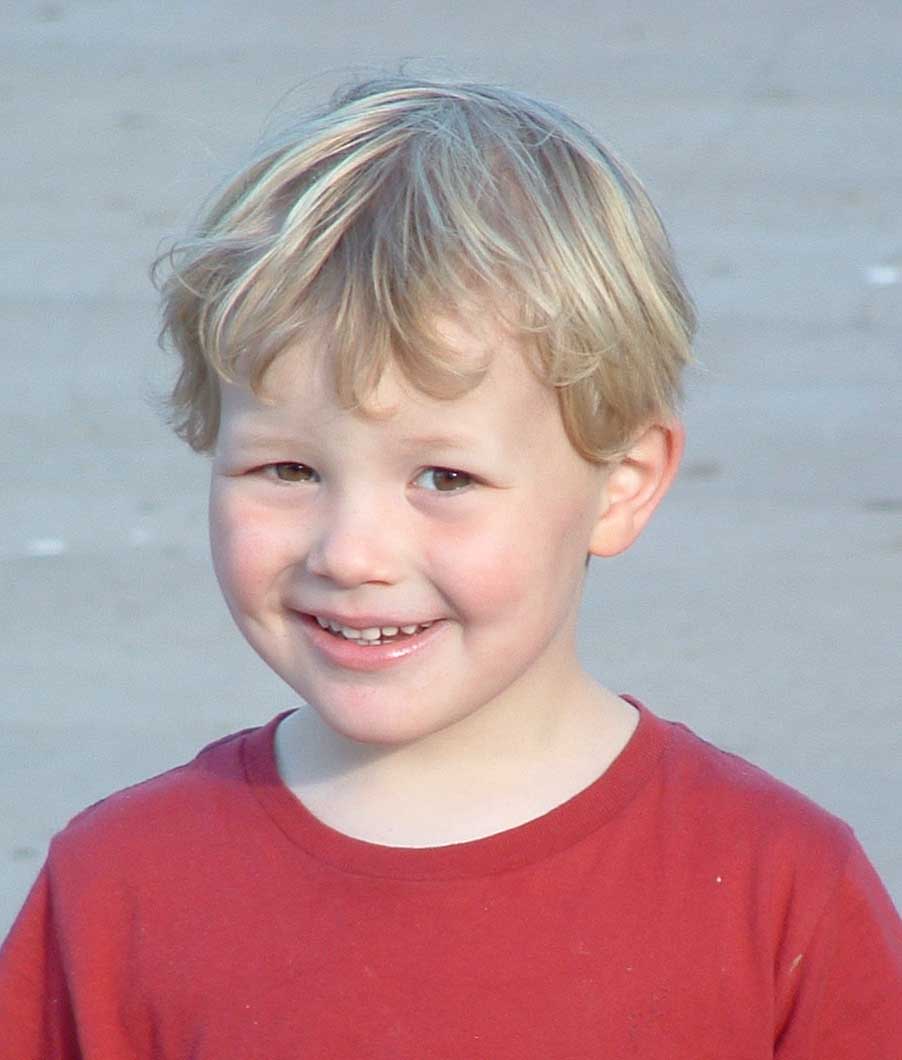
The new Labour government promised when they got into power that they would find funding for autism. Today, they have come through on their promise for me.
I found out today that they will pay $6,000 each year for the next two years until Bright Eyes is 7 in fees to our RDI consultant for ongoing therapy. This will cover our therapy costs.
I am really pleased about this. I had just let our consultant know that we were going to have to give up her regular help and just toddle along on our own because we had run out of money to pay for RDI after doing it for two years.
Now we can continue on, thanks to Kevin Rudd and the pollies who are taking autism seriously!
Showing posts with label getting help. Show all posts
Showing posts with label getting help. Show all posts
Monday, November 3, 2008

Friday, April 11, 2008
Thank you
I would like to publicly and thankfully acknowledge the generosity of so many people in Bright Eyes' life.
There are many who give their love, acceptance and friendship to him, and to us with him.
There are many others who show their concern and commitment in praying regularly for him - and for us.
Then there are three particular lots of people who give generous amounts of their money to help us pay for the RDI therapy that is making such a difference in his life. Thank you to my parents, my grandfather, and now our next door neighbours!
You all help so much. We couldn't do it without you. Praise God for you!
Tuesday, April 1, 2008
Poor me
Yesterday Bright Eyes had a great morning, and a rotten afternoon. Something triggered off his anger - maybe he was tired*? - but he just spent the afternoon yelling at everything and everyone.
One of the things I find most difficult about him is the lack of 'prosody' in his voice. He is not able to fine tune his tone, pitch, expressions or volume. It's either on or off. And when it's on, it's loud and really really annoying.
I feel guilty about not liking his voice, and yesterday I lost it with him several times. Of course, this does absolutely nothing to help anybody. It makes him louder and angrier and gives me a sore throat and more work to do to calm everything down.
I was feeling very sorry for myself and rang my mum, whose first words were, "Oh, darling, you poor thing. I feel so sorry for you." Aaaah. With that, I could breathe again, and felt ever so much better. Thanks Mum!
*I think he probably was tired. He's been getting to sleep about 10.30pm and sleeping in until 9 for the last two months or so. But last night I couldn't believe that he was conked out at 8.30!!!
Monday, December 3, 2007
S-L-O-W D-O-W-N
Slowing down is such an important part of RDI. Why do I find it so very very difficult?
I'm the sort of person who has always done four things at once, while thinking about the fifth and sixth things to do at the same time. I like achievement. I like efficiency. I like competence. I like not wasting time. I finish people's sentences for them. I get impatient when I have to wait... for anything.
I'm a classic Type A personality. I create stress and panic when I can't. It's not a great way to live.
Our feedback from our consultant today was to give Bright Eyes more space to process and think, and to slow down ourselves as we do this.
I really appreciate feedback like this. It brings me back to the basics. I've been flapping around in my head, panicking madly for a number of weeks now, and feeling dreadful physically as I do it. So today I have been conscious of my breathing and conscious of needing to chill out and just calm down.
I think one reason is that I was busy looking for another 'magic bullet' to fix Bright Eyes. I need to remember that I've found that magic bullet already. It's called RDI. The only trouble is, it's not instant and its' going to take time, and I have to change myself to be able to make its magic work.
Thursday, November 29, 2007
Fringe dweller
Although my two year old is not the subject of this blog, he features in my worries frequently.
I have been concerned about him for a little while. He’s obviously not ASD from his social skills, and I owe a lot to RDI for helping me to recognise his good referencing and checking. However, I think his speech is slow, his bowel motions and picky food habits remind me of Bright Eyes, plus he has a clear milk intolerance.
I thought he might need testing for intolerances so that I could get on top of whatever gut issues he has and increase his rate of normal development, so I went into the GP a few months ago to ask her for an allergy test. She wrote a referral to the allergy clinic of the best children's hospital in the state, which is where I drove (1.5 hours) today.
The first thing I said to the paediatrician was “I’ve got an ASD boy, and I’m concerned about this child because I know there’s a brain/gut connection and diet plays a big part in autism, and I think he has some allergies, plus a few gut issues the same as my ASD boy.”
She said straight away, “Well, you know that research has been completely debunked. Are you talking about Wakefield’s study? He was pulled in front of the Medical Board and given a dressing down. He’s lost all credibility.”
I was completely flummoxed and said, “I don’t know who’s done what research, but there’s a lot of stuff out there that says there is a huge connection between gut and brain and diet is really important.”
“Well,” she said, “there’s a whole lot of stuff on the internet and you can’t believe everything you read.”
At that point I started to cry. I spent the rest of the consultation in tears, and in the end the doctor asked more questions about me than the baby, and even suggested I go to a psychiatrist for my depression.
I was too polite to tell her that I was crying because she completely rubbished everything I have learned and put into action.
I have spent sooooo long doing research and reading, and I have put in so much energy implementing diets and keeping Bright Eyes from eating stuff he would like to eat. And I have seen results. And then I have a doctor tell me there's no proof and it's bad medicine.
I feel like I am on the fringe... again.
Saturday, September 22, 2007
Accept him as he is
I see a counsellor every few weeks to talk about things coming out of Bright Eyes' autistic spectrum disorder. It helps a lot but something she said this week was very challenging.
I was talking about how much time and energy I put into his problem. And she said "What exactly is his problem? I don't mean what's his diagnosis, but what is the problem with the autism? How do you see it?"
It was an easy answer for me. The problem I see with Bright Eyes having ASD is that he will never be truly accepted amongst his peers or have equal relationships with them. Someone will always have to regulate for him and he will be seen as a burden, a weight and someone whom other people will tolerate at best, or persecute at worst.
My counsellor thought that was a terrible way to think about someone with a disability. She asked me if I knew anyone who had a disability who was happy, and I said that wasn't the point really. The point was, do I know anyone with a disability who is truly part of 'the group'? And my answer is no.
We got to talking about the movie Forrest Gump and why Jenny didn't stay with Forrest through her adult years if he loved her and she loved him. The counsellor said it was because of Jenny's own problems and abusive background. I argued that no, it was mostly because Jenny could not have an equal relationship with Forrest. He couldn't relate to her on her terms. She always had to regulate for him.
I added that I was never happy with the ending of the film. Forrest ends up looking after his son when Jenny dies. He is pleased that his son is 'smart' and doesn't have the same learning disabilities that he does. It all looks rosy, but not to me. I can only think that that child will grow up to be embarrassed about his father, and ultimately to avoid him as he relates to his peer group in teen and adult years. Obviously most children have embarrassment and peer separation issues with their parents, but this would be a very extreme case. I just can't see Forrest's son having anything much to do with him at all as he gets into adult life.
The counsellor was very surprised indeed. In fact, I don't think I've ever told anyone this (now of course I've told everyone...).
As we went further in the discussion, she said that if I am able to accept Bright Eyes as he is, without needing him to be a 'normal' child, he ultimately will 'need' less from me and we will have a better relationship.
I think this is probably very true. And yet I don't know how to accept him as he is without also wanting (needing) him to change and recover and improve! Do I really know how to accept anyone as they are? Do I accept my other children as they are? What does that really mean anyway?
I'd be grateful for your comments.
Tuesday, June 19, 2007
One sad, one happy
One sad thing
I visited a playgroup today for the first time since we moved here. It was a really nice playgroup: well run, friendly people, nice toys and happy children. I have only good things to say about it. My boys were happy and played well. I had a yummy cup of tea, and managed to say no to the delicious chocolate muffins being passed around.
Why did I feel so rotten being there then?
I hate to say it, but it's because I am still jealous of everyone else's 'normal' kids. Because I still feel like I'm just making it every day. Because I feel like I've joined a 'secret club' that no-one else there is part of. Because I feel like I've got bigger problems.
Selfish? Maybe. My husband says it is 'reactive depression' to a small loss. (He went to a seminar on depression recently.) With every big loss, there are lots of small losses. Today's small loss was not being able to go to a playgroup and forget that Bright Eyes has autism.
One happy thing
A lovely lady from our church, who happened to be a good friend of my nanna before she died, has offered and is keen to help me out with Bright Eyes' RDI. She has offered twice, once in writing, so I take that as serious!
I'm going to give her a CD of some RDI lab time activities plus some reading so she can learn about it. Then she's going to come and sit in on some lab time, get Bright Eyes used to her, and hopefully do a session or so a week, plus maybe take him for a walk here and there.
Wow!
Friday, May 25, 2007
A shot of optimism
I like hanging out at Bright Eyes' preschool. I feel a little bit suspicious sometimes as I take my time signing him in and out and walk around trying not to look too aimless.
The reason is that I like talking to the teachers about Bright Eyes. It gives me a little shot of optimism in my week to hear that he's been happy, that he's done a painting, that he's played well with the trains, or the toys or sat through the group time quietly.
I find it easy to get a bit depressed about him the rest of the week. Even with all his improvements, he's still a child on the autistic spectrum and I still have to fight him to go in and out the door, and work really hard in his RDI therapy. Life ain't normal, no matter how well he's doing.
So it's really good to chat with the teachers who have spent time with him, and who really seem to care about him. They have a 'communication book' in which they write down what he's been doing during his day, which helps me too. It's wonderful to 'share' him with lots of people who are enthusiastic about him.
Sunday, April 1, 2007
What I did next
The helpfulness of the paediatrician's suggestions were limited, so I began branching out and finding more resources via the net.
Some things I looked into:
1. The Hanen speech pathology program - 'More than Words'
This is a course you can do which implements some good speech pathology practices into your everyday life. We got the book which is thick, but full of cute illustrations and read it through. It helped us to understand what Bright Eyes was doing with his language.
2. The Handle program
This is a program started by an American woman who grew up autistic and challenged in lots of sensory areas. It mostly focuses on gently balancing the body's sensory intake. I got the book and my eyes were opened to the challenges autistic children face just by being awake and alive! Things like being oversensitive to movement, sounds, smells and textures. If their sensory systems are so out of whack, it's no wonder they are highly strung and develop self-protective odd behaviours. If we had a few more thousand dollars, and if Bright Eyes was more severely challenged in this area, I'd be doing this program.
3. Early intervention local groups
There are a number of early intervention services for children with special needs funded by the Australian government around. Most of these have a waiting list and the one I found was no exception. However, they did have an 'open playgroup' meeting weekly a few suburbs away. I decided I should try it, so ventured in gingerly one Thursday morning.
It was a stretching experience. By going in and meeting other mums with children that were struggling I felt like I had suddenly joined a very depressing secret club. And the worst thing was: my child was not the 'best' one there. I had hoped that it would be a group that I could say, "Well, I don't really need to come to this. Look, all these other children are much worse off than Bright Eyes."
True, I could look around and see kids who had more obvious problems than his, but by and large, he fitted in quite well. I had to get used to saying to myself: "I have a child who has special needs." It doesn't roll off the tongue easily.
The best thing about this group was that I made a friend - with an ASD child just the same age as Bright Eyes. As time went on, we both quit the group but we have stayed in contact as support for each other.
Subscribe to:
Posts (Atom)